Local School Raises over £2500 for Children & Young Peoples Appeal.
On Friday 29th April we were lucky enough to attend St Laurence Church School in Northfield to present the students and teachers with their very own fundraising certificate having raised over £2500 for ROH Charity.
Millie – School Ambassador, aged 11 kindly explained to us how the Lenten project works at St Laurence Church School:
“Someone from the Charity comes at the beginning to explain what the Charity does (I did this on behalf of the ROH-to “launch” the Lenten project due to COVID). It lasts for the month of Lent (hence the title).
Each week, a different year group leads, all 4 years in the school. This then happens for 4 weeks.
Each lunchtime, the children hold stalls, where other children pay money to take part (games, raffles etc)
As well as the daily lunchtime stalls, there are other organised fundraisers during lent for the selected charity:
Lenten disco, Sponsored walk, Sponsored Danceathon,Frozen Friday (Ice cream sale), Bake sale (cakes), Silver service (the staff and year 6 children wait on the younger children who buy tickets), Children’s raffle, Adult raffle, Non-uniform day.”
Students chose ROH Charity as their Charity of choice for their 2021 Lenten project and have asked for the funds to support our Children & Young People’s Outpatient Department.
“We really value these key community partnerships and really value when children themselves, take it upon themselves to support us. The funds raised will enable us to give young patients at ROH an even better hospital experience and for that we are so grateful” – Ali Gray, Charity Manager
#TeamROH successfully took part in The Great Birmingham Run last Sunday and raised a whopping £2782.09 including gift aid, towards our general appeal.
The last time the event took place was back in 2019, so it was lovely to see ROH Charity represented at the event once again.
It was lovely to have both staff and patients taking part in the event, many of whom have shared their various reasons for taking part in these fundraising initiatives:
“The expert care I received at ROH throughout the month that I was in hospital was amazing; I am back home with my family and able to take part in this event because of the first-class professionals that work there” Jon– Patient at ROH
We would like to say a huge thank you to all the fundraisers who took part, as well as all those who donated to their team page or took the time to attend the event on the day!
Consultant Anaesthetists, Dr Adam Hancox and Dr James Brunning contacted the ROH Charity in summer 2021 to initiate a new research trial to support the recovery of patients at The Royal Orthopaedic Hospital (ROH) in Birmingham. Their application was granted by the Trustees of the Charity and they proceeded with the trial.
Data from The Royal College of Anaesthetists national audit showed that the most common complaints after surgery were thirst, sore throat and post-op nausea and vomiting (PONV), this trial looks at an innovative way to suppress these symptoms for patients within recovery.
A registrar who worked in Holland trialled giving children ice lollies after their surgery. When he walked into the recovery department, he discovered kids enjoying ice lollies rather than children in discomfort and crying which is usual for this age group. He was hugely struck by the impact something so small had on their wellbeing.
The ‘ice lolly trial’ as we call it, has been introduced at multiple other medical institutions across the UK. University College London introduced the trial within their Intensive Care Unit to support patients when taking their endotracheal tubes out (plastic breathing pipe into the windpipe that allows mechanical ventilation for sedated patients).
There was also a trial at the Mayo Clinic which looked at children’s attendances at A&E. If the children were given ice lollies, 70% thought the doctors cared vs 57% without a lolly.
The trial was introduced at The ROH and data was collected from 154 patients. Half of which were given ice lollies the others were not. All patients had the same average level of comorbidities, length of surgery and starvation times.
As soon as the patient woke in recovery, the team completed a global wellness score and again on leaving recovery.
The cost of medication given to support the recovery of patients with PONV ranges from £1.52 – £5.99, whereas the cost of an ice lolly roughly 10p.
From the data collected, we can see that there is a slight decrease in the amount of medication given per person to the ice lolly group.
Capture
3
1
Data was also collected for these patients around the length of time they stayed within recovery. The group of patients who were given ice lollies were able to leave the ward area 30 minutes prior to those who were not given an ice lolly.
In summary, it seemed that giving patients an ice lolly reduced their length of stay in recovery, improved their wellness, reduced thirst, sore throat and PONV and potentially saved a small amount of money.
This was a small project in which ROH Charity funded to support patient wellness. The results were positive and it is something the Trust are looking to implement further.
“The recovery staff really enjoyed it. It altered their interactions with the patients, and it brought a little bit of fun and an alternative to standard medical treatment for common problems for patients” Dr James Brunning – Consultant Anaesthetist
“We would like to say thank you to Dr James Brunning and Dr Adam Hancox for letting us be part of such an innovative and fun research trial that produced really interesting results.” Ali Gray – Charity Manager
ROH Charity supports small start up research projects like this one all the time to enhance the experience of patients not only at ROH, but across the UK.
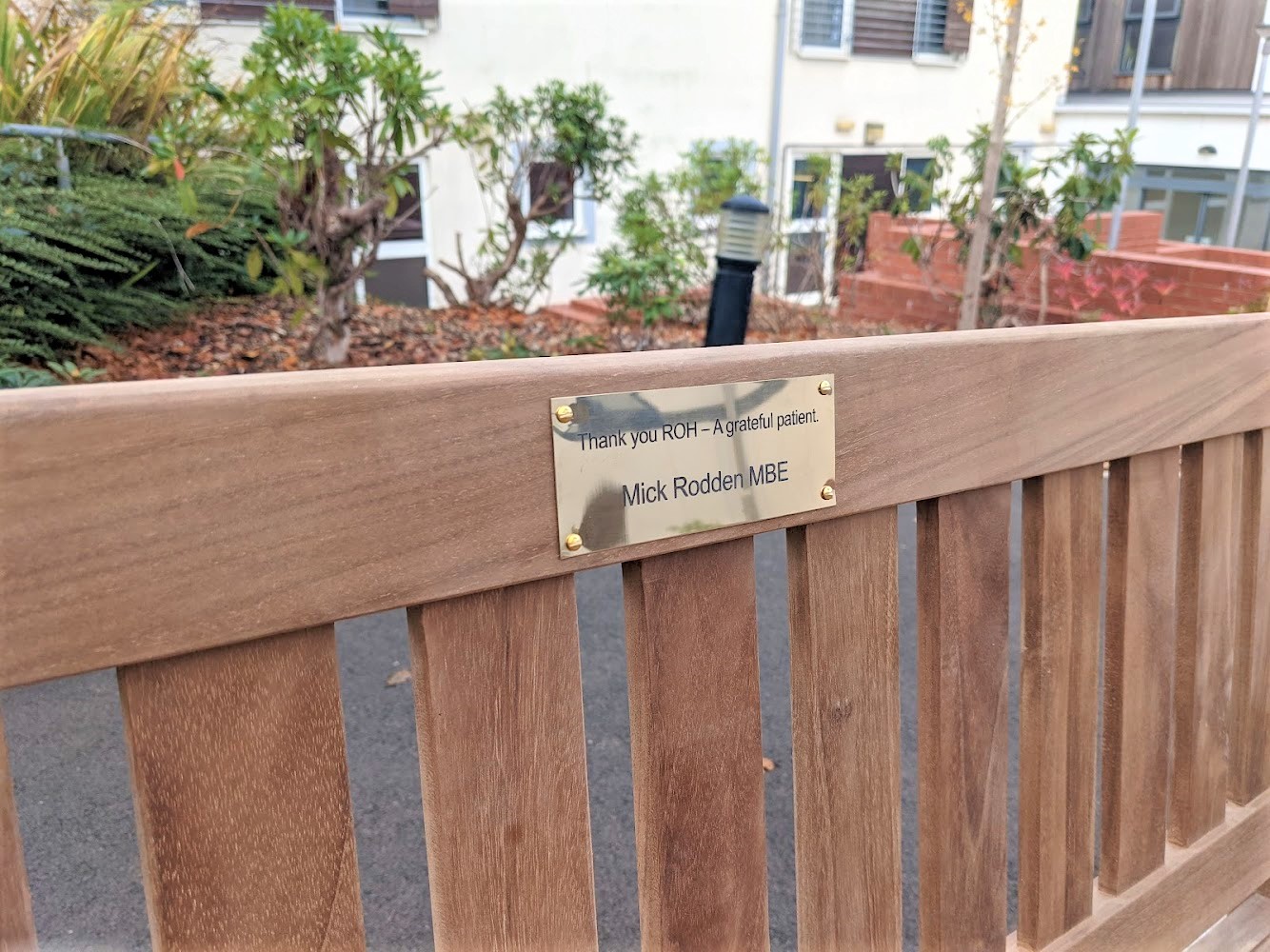
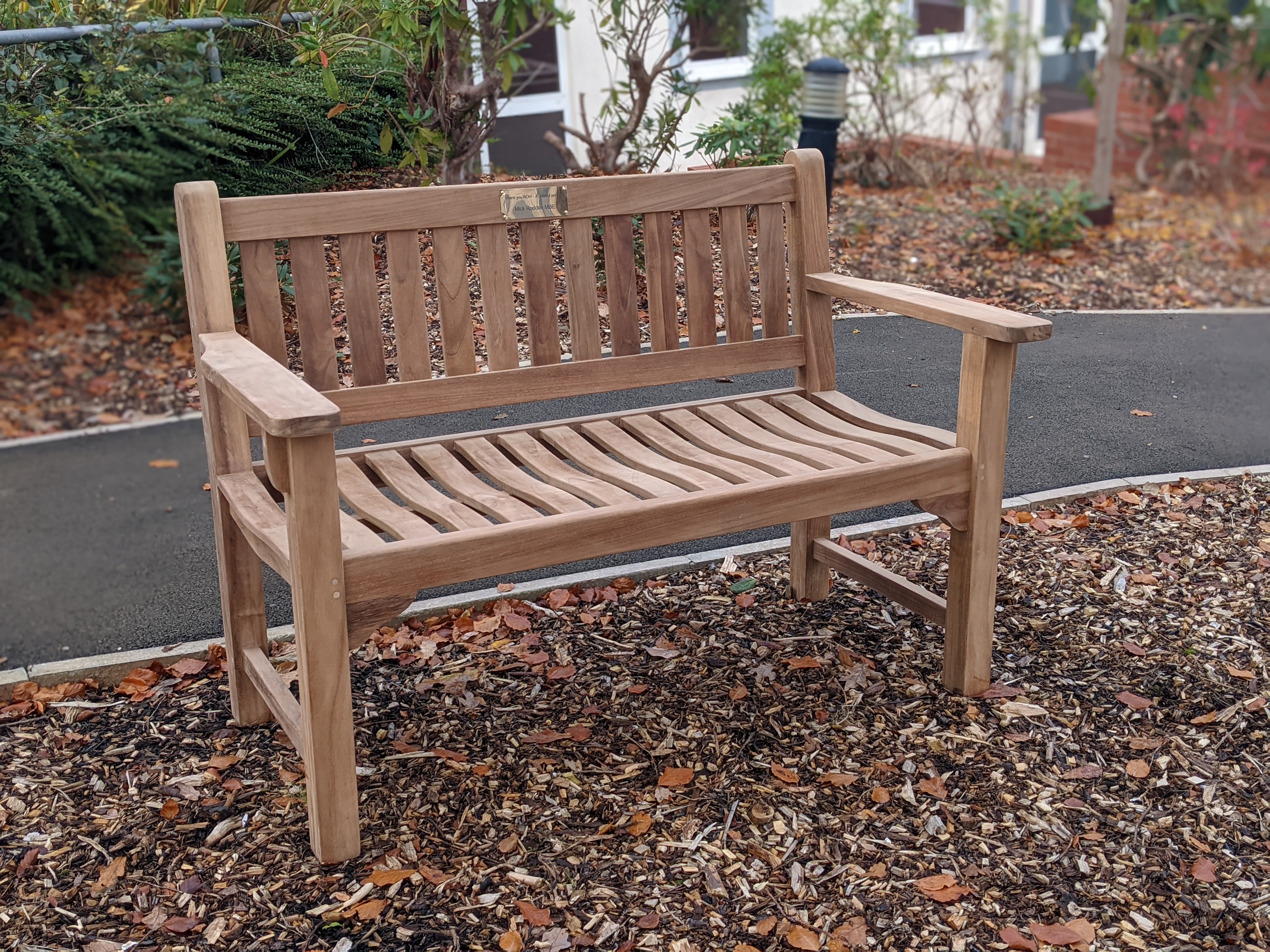
Earlier this month we had the pleasure of organising a commemorative bench from a patient who has been visiting us here at The Royal Orthopaedic Hospital (ROH) for two years.
Mick Rodden contacted us after looking out of his side room window at the green space behind our Outpatients Department whilst he was an inpatient with us. He wanted to organise a bench to remember his time with us as well as give back to both patients and staff who utilise the green space for reflection.
Here is a note that Mick wrote to us after the bench was installed. It shows us that giving isn’t just imperative for us to support the ‘added extras’ at ROH, it is something that gives our donors pleasure too.
MicrosoftTeams-image (1)
Mick said: “ROH. looks after the repair and healing of the body and everyone on the wards trusts the dedication, quality and professionalism of the staff whose sole aim is to get you home feeling far better than when you were admitted. And they do that, they do it because they genuinely care. Everyone from the car park attendant, the cleaners, physios and nurses to the wonderful consultant and the rest of the team are patient-focussed.
“For myself, I have been coming to ROH for two years now, interrupted due to the COVID pandemic. I thought when I was transferred from my local Kettering Northants Hospital in 2019, I would be losing my leg but you have changed all that. I haven’t lost my leg and I have a positive vision for my future, being 70 doesn’t kerb my ambition.
“Mending the physical problems is what you do best, but you also make a difference to the patient’s mental health, the humour, the advice, the positivity, the different characters (crazily funny nurses and health care assistants) who treat and support us all make that difference.
“Donating towards a bench seat or table was an easy choice for me. I just asked the question, and it was done automatically. The charity does so much for the patients and staff wellbeing.
“This seat is something that patients, visitors and all staff can use, just to get away from the ward and relax for a short time whilst in pleasant, quiet surroundings especially in the summer can be an enormous benefit.
“We sometimes forget that the wellbeing of the people who look after us so well is paramount to our own successful healing.
“Thank you all at ROH.”
We would like to thank Mick for his contribution to supporting wellbeing at ROH as well as all of the donors, fundraisers and sponsors who make our work possible.
To donate or contribute towards this cause, simply contact the Fundraising Team via roh.charitablefunds@nhs.net or by calling 0121 685 4379.
Kaddy Benyon is a poet and former television scriptwriter. She lives in Cambridge with her husband and two children. In November 2020, she began her journey as a patient at The Royal Orthopaedic Hospital when she discovered a lump. Here is her story…
“In November last year, getting changed on the riverbank after my daily swim, I noticed a small lump in my left thigh. At first I thought it was a bite or a bump, but it wasn’t itchy and it didn’t hurt. When it hadn’t gone down after a few weeks, I went to my GP who was concerned enough to refer me for a scan. Two days before Christmas, I had an ultrasound which quickly led to an MRI and then to a CT scan and I was referred to The Royal Orthopaedic Hospital (ROH) for a biopsy which came back inconclusive; the only option was to have surgery to remove my mysterious guest.
“On 24 February 2021, I was admitted to Ward 4 at the height of the most deadly wave of the COVID-19 pandemic. I was a long way from home and unable to have visitors for the duration of my week-long stay. It was a frightening time but would have been more so had I not been cared for by such compassionate, intuitive, playful and encouraging NHS staff.
“I would like to say a great big ‘THANK YOU!’ to every single member of Ward 4 staff who checked my leg, monitored my blood pressure, oxygen levels, sugar levels, who injected me as painlessly as possible, who helped me to the loo, who washed me, fed me, filled and refilled my water jug (sorry, thirsty gal), cleaned my room, changed my sheets, told me about the weather, who smiled at the photo of my children by my bed, gave me morphine, who showed me how to self-inject an anticoagulant into my tummy, who encouraged me out of bed when I couldn’t bend my leg, and who helped me access the Wi-Fi so I could Zoom home. I am especially grateful to the nurse who caught me when I fainted the first time I stood up, and to the crash team who burst in as though we were in an episode of Casualty!
“Once I was well enough to make the journey back to Cambridge, I was greeted by my husband, kids, cats, cards and curry. I made a speedy recovery at home, mostly I think because I was so desperate to get back in that river of mine! I have swum almost daily throughout adulthood, mostly in my local pool. Around six years ago, a friend invited me to swim with her in the river from a small, unassuming club in Newnham she was a member of. I fell hard for swimming in nature, so I joined too. For the first five years, I only swam on the hottest days of summer, often taking my children for play swims. But as the virus began to take hold again last autumn, I felt I couldn’t face another indefinite period without pool swimming, so along with some of the women I had met at the riverbank club (now affectionately known as The Swim Sisters), we decided to see whether we could swim through winter in the river. I was certain I wouldn’t be able to tolerate water any cooler than 17 degrees, but buoyed by companionship and adventure, all of us kept turning up day after dark, rainy day – my own coldest swim being 2.5 degrees on the day I had to start isolating before surgery.
“By March I was able to hobble along the riverbank on my crutches and to watch (and envy) my swimming sisters. At my check-up in April, I was a gazillion miles beyond relieved to learn that the tumour had been benign. And two weeks after that, thanks to my physio, my acupuncturist and of course my cheerleading swimming sisters, I was finally able to get back in the river and resume my daily swims.
“I now have a cracking 8″ scar along my left thigh and a permanent disfigurement, having lost two thirds of one of my quadriceps. I have also had to learn to walk again, to drive, to ride my bike, and of course to swim. Sometimes I need to go slowly as I am liable to cramp in the part of the muscle I still have when I overuse it.
“On Sunday 26 September, some of my swim sisters and I will attempt to swim the 2k stretch of the River Cam between The Orchard at Grantchester and Sheep’s Green near Lammas Land. If you are local and would like to support us in person (or even if you’re not so local but fancy a day trip to Cambridge) please do come to either the start point, the end point, or any of the riverbank along Grantchester Meadows and cheer us along, you’ll be able to spot us by our neon tow bags! We estimate being in the water for about an hour, and we will (hopefully) celebrate our achievement with coffee and cake for all at the finish. My lovely school friend and her partner, who run My Persian Kitchen in Cambridge, are very kindly donating two delicious Persian Love Cakes – they are not to be missed!”
Kaddy raised £1000 in her sponsored open water swim and has worked with the staff on ward 4 to develop a meaninful way to utilise the funds within the department. After much discussion with the ward team, Kaddy and Ward Manager – Yi Kessey, agreed that the funds will be supporting wellbeing facilities for staff on the ward.
These funds have enabled the department to receive revitalised break facilities on Ward 4 where she spent most of her inpatient stay. This included refreshment facilities, a new coffee machine and new smart TV for staff to utilise whilst on their break. We cannot thank Kaddy enough for her fundraising support and for sharing her story with the world.
To share your story or support ROH Charity in any way, contact us on 0121 685 4379 or email roh.charitablefunds@nhs.net.